Structural Drying and Dehumidification in Azle, TX
Once the standing water is gone, the water inside framing, drywall and concrete is still there. The drying team sets air movers and dehumidifiers to the class of loss and logs readings until materials are dry.
(888) 527-9134Readings still high after a leak? Phone in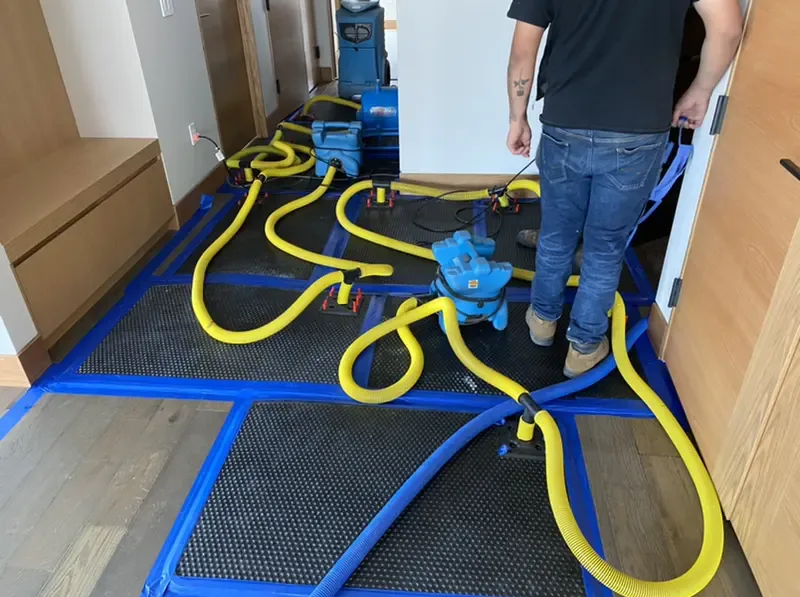
What a proper job looks like for structural drying and dehumidification
Dispatch at any hour
Active water is treated as urgent around the clock, nights, weekends and holidays included, because every hour adds wet material.
IICRC S500 drying
Truck-mounted extraction, air movers and LGR dehumidifiers sized to the class of loss, not a shop vac and a box fan.
A claim file from day one
Moisture maps, daily psychrometric logs and timestamped photos taken before any drywall or flooring comes out.
North Texas water know-how
Slab leaks, freeze splits in attic and exterior-wall lines, creek runoff and sewer backups lead the list in this part of the county.
First steps for structural drying and dehumidification in Azle
- Run the AC. Keep windows shut on humid days.
- Leave equipment running. Turning units off resets the drying clock.
- Keep doors as set. Containment keeps dry air where it is needed.
- Note any new stains. Tell the technician at the next reading.
What does structural drying and dehumidification cost in Azle, TX?
In Azle, TX, structural drying typically runs $1,000 to $7,500 for one to several rooms, and slab, hardwood or whole-house drying can pass $16,000. Equipment count, drying days and material class drive the price.
One or two rooms
- Air movers
- One LGR unit
- Daily readings
Several rooms or walls
- Multiple LGR units
- Cavity drying
- Containment
Slab, hardwood or whole floor
- Drying mats
- Extended monitoring
- Class 4 drying
Ranges are typical, not a quote: the water category, square footage, material class and how fast drying started move the number most.
Run the numbers in the cost calculatorHow structural drying and dehumidification is handled, start to finish
Reference
Dry reading from unaffected material.
Set
Equipment sized to the class of loss.
Log
Readings and humidity recorded daily.
Release
Equipment out when readings match.
Structural drying is the part of the job that decides whether walls and floors stay sound. It is measured, not guessed: a dry reference reading is taken from an unaffected wall or floor, and wet materials are dried until they match it.
Class of loss sets the equipment
Class 1 means little water on low-porosity materials. Class 2 means a whole room with carpet and wall bottoms wet. Class 3 means water from above, with walls and ceilings soaked. Class 4 means dense materials such as hardwood, plaster or a concrete slab that hold water tightly and need longer, targeted drying.
- Air movers set to each room's evaporation load
- LGR dehumidifiers sized to the cubic footage
- Drying mats for hardwood and slabs
Psychrometrics in plain words
Each day the technician logs temperature and humidity inside the drying area and outside it, plus material readings at marked points. If the numbers stall, equipment is moved or added. Humid spring weather slows evaporation, so dehumidification carries more of the load then. The Texas Department of Insurance has consumer help on homeowners claims, and these daily logs are the record that supports a drying bill.
Walls or floors still reading wet? The drying team works 24/7.
Book a moisture reading visitWhen equipment comes out
Equipment stays until materials read within 2 to 4 points of the dry reference, not until a surface feels dry. Pulling equipment early leaves water in the framing that later warps flooring and stains paint. After a flood, Ready.gov flood tips cover safety before re-entry, and the cost calculator gives a typical range for a drying job.
Structural drying and dehumidification across Azle and nearby towns
Coverage runs across ZIP 76020 and 76098: the older blocks around Main Street, the State Highway 199 corridor, homes along Ash, Silver and Walnut Creeks and the lake streets toward Eagle Mountain Lake, on both the Tarrant and Parker County sides of town.
Nearby coverage reaches White Settlement, River Oaks, Lake Worth, Springtown, Weatherford, Pelican Bay.
Related water damage services
Structural Drying and Dehumidification questions, answered
Still dealing with it?
Walls or floors still reading wet? The drying team works 24/7.
(888) 527-9134 Book a moisture reading visitHow long does structural drying take?
Most Class 1 and 2 losses dry in three to five days. Class 3 and 4 losses with soaked walls, hardwood or concrete take longer.
Why does structural drying need dehumidifiers and air movers?
Air movers lift water off wet surfaces into the air, and dehumidifiers pull it back out of the air. One without the other stalls.
What does 2 to 4 points of a dry reference mean in structural drying?
A meter reading is taken on unaffected material of the same type. Wet material is dry when it reads within 2 to 4 points of that number.
Can the structural drying equipment be turned off at night?
It is best not to. Turning units off lets humidity climb back up and adds days to the job.
Is structural drying covered by insurance?
Drying after a covered sudden loss is usually part of the claim, and daily logs support the bill. Coverage depends on your policy, so check with your own insurer.
Still damp after a leak in Azle? Dry it to the standard.
Water left in framing and slabs warps floors and stains paint later. The drying team logs readings until materials match a dry reference.
(888) 527-9134Get readings-based drying