Structural Drying and Dehumidification in Springtown, TX
Water that has soaked into studs, subfloors and drywall keeps damaging a house after the puddles are gone, so drying equipment and meters take over until every layer reads normal.
(888) 527-9134Plan the full dry out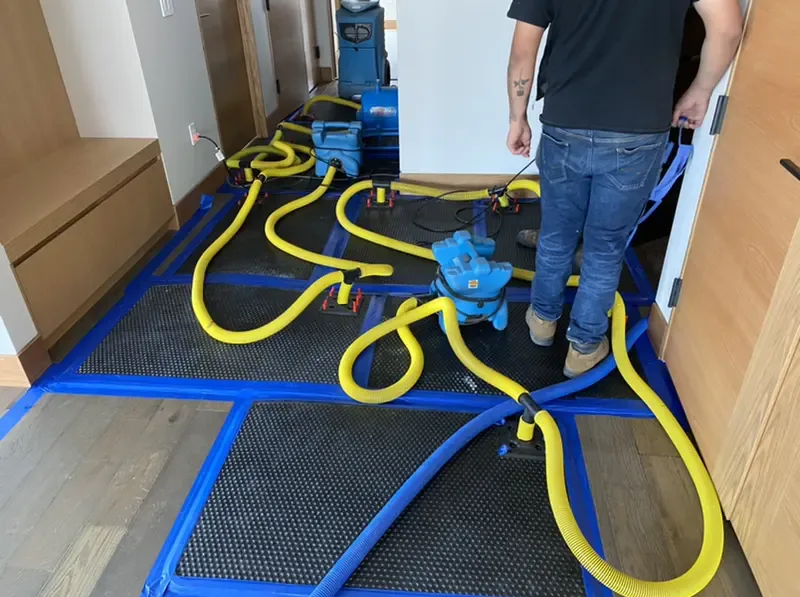
What a proper job looks like for structural drying and dehumidification
Dispatch at any hour
Active water is treated as urgent around the clock, nights, weekends and holidays included, because every hour adds wet material.
IICRC S500 drying
Truck-mounted extraction, air movers and LGR dehumidifiers sized to the class of loss, not a shop vac and a box fan.
A claim file from day one
Moisture maps, daily psychrometric logs and timestamped photos taken before any drywall or flooring comes out.
North Texas water know-how
Slab leaks, freeze splits in attic and exterior-wall lines, creek runoff and sewer backups lead the list in this part of the county.
First steps for structural drying and dehumidification in Springtown
- Map the moisture. Meters mark wet walls, floors and framing.
- Place equipment. Air movers and dehumidifiers are set on a planned layout.
- Check each visit. Readings are logged and equipment is moved as needed.
- Remove equipment. Gear leaves once every point reaches target.
What does structural drying and dehumidification cost in Springtown, TX?
One or two rooms usually cost $1,000 to $3,000 to dry, several rooms or walls run $3,000 to $7,500, and drying a slab, hardwood or whole floor can reach $16,000 or more.
One or two rooms
- Air movers placed
- Dehumidifier running
- Visit readings
Several rooms or walls
- Wall cavity drying
- Longer equipment run
- Daily checks
Slab, hardwood or whole floor
- Mats and hoses
- Extended monitoring
- Final clearance
Ranges are typical, not a quote: the water category, square footage, material class and how fast drying started move the number most.
Run the numbers in the cost calculatorHow structural drying and dehumidification is handled, start to finish
Walkthrough
Wet areas are mapped with meters.
Setup
Equipment is placed to a plan.
Monitoring
Readings repeat on each visit.
Pickup
Gear is removed at target.
A house can look dry while the studs, subfloor and insulation still hold water, and that hidden moisture leads to swelling, odor and mold. Structural drying treats the building as a system and brings every layer back to a normal reading.
After storms in any home
Storm water damage applies to every kind of house in Springtown, including the mobile and manufactured homes found in the rural area. Lighter floors and walls in those homes need careful airflow, while framed houses often need cavities opened and dried from the inside.
- Air movers aimed along wet walls and floors
- Dehumidifiers that pull moisture from the air
- Drying mats and hoses under hardwood floors
How drying is tracked
Readings are taken at set points on the first visit and again on every return, and equipment is moved or removed as those points dry. The goal is a documented return to normal moisture, not a guess based on how the surface feels.
Damp walls and floors keep causing damage after the puddles are gone, and a call can plan the drying.
Plan drying for the houseWhat affects the length
Drying time depends on how much water entered, the materials involved, the humidity in the house and how soon extraction happened. Dense materials such as hardwood and concrete dry slowest. Work after a pipe break often starts with burst pipe cleanup before drying begins. Springtown summers are hot and humid, which raises indoor humidity and slows drying unless dehumidifiers keep running.
Structural drying and dehumidification across Springtown and nearby towns
Structural drying covers every kind of building in Springtown, from storefronts on the historic town square and along State Highway 199 to family houses, rural properties and manufactured homes outside the center, with JE Woody Road and nearby streets included in the same plan.
The same service nearby: structural drying and dehumidification in Azle, Weatherford, Lake Worth.
Water damage restoration in Springtown › · every town covered ›
Related water damage services in Springtown
Structural Drying and Dehumidification questions, answered
Still dealing with it?
Damp walls and floors keep causing damage after the puddles are gone, and a call can plan the drying.
(888) 527-9134 Plan drying for the houseHow long does structural drying take?
Many jobs need several days of equipment, though dense materials such as hardwood, subfloors and concrete can take longer, and the meter readings, not a calendar, decide when the job ends.
Why are dehumidifiers needed with air movers?
Air movers lift moisture off surfaces, and dehumidifiers pull it out of the air, so without both the water just moves around the room and settles back into materials.
Can walls be dried without opening them?
Sometimes small holes or removed baseboards let warm dry air move through a cavity, but wet insulation, soaked drywall or sewage contamination means the wall has to be opened.
Is it safe to live in the house during drying?
Often yes in unaffected rooms, though noise and warm air are part of the process, and areas with sewage or open walls may need the family to stay elsewhere.
How is drying proven finished?
Final readings in walls, subfloors and framing are compared with readings from an unaffected part of the same house, and those numbers go into the job file for the insurer.
Hidden moisture keeps harming a building until it is dried
Share what flooded and what has already been removed, and the crew will explain how equipment, monitoring and final readings would be handled.
(888) 527-9134Call about the dry out