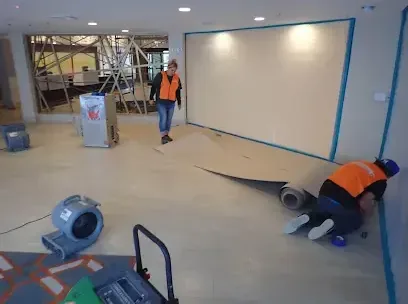
On August 2, 2010, the 24 inch main pipe carrying treated water out of Lake Weatherford pulled loose just after midnight. The city was without running water for more than 24 hours, and restaurants, car washes, pools, city offices and Parker County offices closed. For a shop, hotel or restaurant owner, the event shows how much a water problem costs in downtime, not only in damage.
Key takeaways
- The August 2010 main pipe failure left Weatherford without running water for more than 24 hours.
- The outage was followed by a boil order and a Stage 5 emergency water shortage, and the mayor issued a disaster declaration.
- A business water loss costs money twice: once for the damage, and again for the hours the doors stay closed.
- When pressure returns after an outage, check for leaks at every fixture and appliance before reopening.
- Document everything with photos and keep receipts for emergency extraction.
What the August 2010 outage looked like
The failure came just after midnight, and by daylight the city was without running water. Water was handed out at fire stations and the public library, and the city brought water in by tanker truck.
The outage closed restaurants, car washes, pools, city offices and Parker County offices. The city also issued a boil order and a Stage 5 emergency water shortage.
The mayor issued a disaster declaration during the outage, which shows how serious the loss of a basic service was for the whole community.
Why this matters to a downtown business
Downtown here has the courthouse district, the Santa Fe Depot, restaurants, hotels and Weatherford College nearby. Those businesses depend on water for kitchens, restrooms and cleaning, so a loss of service is a loss of income.
The same dependence works in reverse when a pipe fails inside the building. A burst pipe or a failed fixture can close a doorway just as an outage does.
Customers notice a closed door long before they notice the cause. A short sign on the window about reopening plans keeps goodwill while repairs run.
- Restaurants lose the ability to cook, wash and serve.
- Hotels cannot clean rooms or run laundry.
- Retail shops lose sales whenever a wet floor blocks customers.
- Offices cannot stay open when restrooms are out of service.
What a boil order and a water shortage mean for a building
After the 2010 failure the city issued a boil order and a Stage 5 emergency water shortage. For a food business that changes daily routines, since water used for cooking, ice and washing needs extra care until the order is lifted.
A boil order is about drinking water safety, not about a leak inside a building. Still, the two often arrive together: when service stops and starts, a weak fitting inside a restaurant or hotel can give way.
- Ice machines and beverage systems need attention after an order is lifted.
- Dishwashers and wash sinks should be checked for loose fittings.
- Hotel rooms and restrooms need a walk through before guests return.
- Floor drains in kitchens can back up when use resumes all at once.
What to check when water pressure returns
When service comes back after an outage or a repair, pressure surges can expose weak fittings and open valves that were left on. A business that reopens without a walk around can find a problem only after the floor is wet.
A short check protects the building and stock.
A written checklist for the opening manager makes the walk through consistent from one outage to the next.
- Walk the building with the main valve open and look for drips at every fixture.
- Check dishwashers, ice machines and wash sinks for fittings that may have loosened.
- Look at ceilings and walls below restrooms and kitchens for new stains.
- Run each tap once to clear air and watch for splashing or spraying.
How a commercial water loss is handled
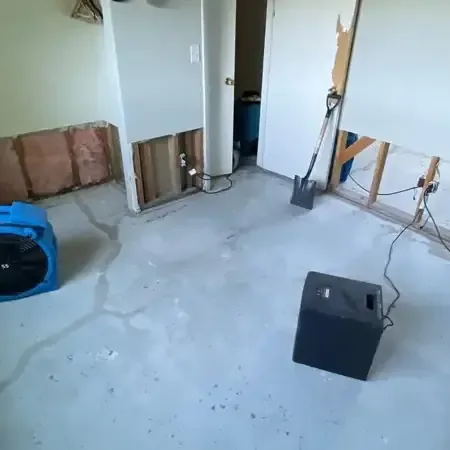
A commercial loss is managed with the same steps as a home, scaled to the space: stop the water, extract it and dry the structure. The difference is coordination, since a business needs to know how long it will be closed and which areas can stay open.
The commercial water damage page lays out how that process works for suites, shops and restaurants, and water extraction covers the first hours.
Keeping part of the business open
A good plan separates wet areas from dry ones. If the dining room is dry, the crew can contain work in the kitchen so the doors stay open where possible.
Temporary walls and plastic barriers help keep dust and moisture out of the dry zones.
Working with landlords and neighbors
Water travels through shared walls and floors. In a historic building with neighbors on either side, a loss in one suite often needs a call to the building owner right away.
Protecting stock, records and equipment
Move inventory, paper records and electronics off the floor first. Cardboard and fabric wick water fast, so they should be raised before the extraction begins.
Photograph each item, since an adjuster will want to see the condition before it was moved. Details about local coverage are on the town page, and the main site has a commercial overview.
Pallets, plastic bins and shelving on blocks keep stock above a thin film of water. They cost little and prevent a lot of loss.
Insurance usually asks for a list of what was damaged. Building that list as items are moved is easier than reconstructing it later.
Staying ready for the next problem
After the 2010 failure, the city said it would redesign the clear well so the system is redundant. That kind of planning also works for a single business.
Know where the main shutoff is, keep an emergency contact list and decide in advance who can authorize work if the owner is away.
A laminated sheet near the back office with shutoff locations, vendor contacts and the insurance number saves time when stress is high.
Questions
What caused the August 2010 outage in Weatherford?
The 24 inch main pipe carrying treated water out of Lake Weatherford pulled loose just after midnight on August 2, 2010.
How long was the city without running water?
More than 24 hours, followed by a boil order and a Stage 5 emergency water shortage.
Did the outage close businesses?
Yes. Restaurants, car washes, pools, city offices and Parker County offices closed.
What should a business do when water returns after an outage?
Walk the building, check fixtures, appliances and ceilings for leaks, and run the taps to clear air before reopening.
Is a commercial water loss handled differently from a home?
The steps are the same: stop the water, extract and dry. The difference is planning around business hours, stock and customers.
Does a water outage by itself cause damage inside a building?
Not directly, but restarting service can expose weak fittings and open valves. A walk through when the water returns catches problems early.