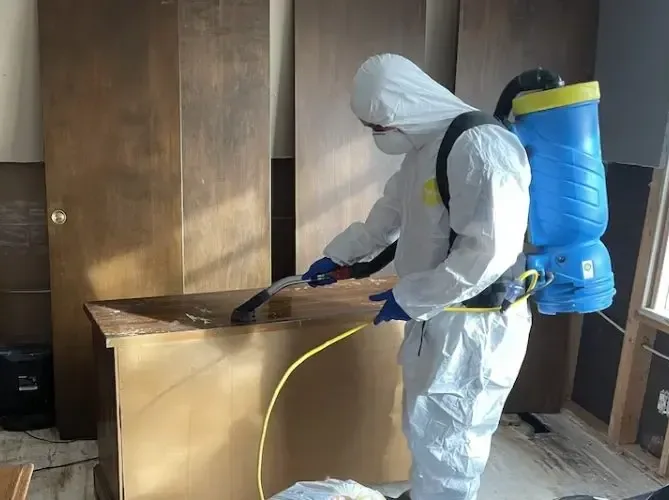
Not every household here gets water from the same provider. The City of Springtown provides water, wastewater and sanitation in its service area, while some residents inside the city limits get water from Walnut Creek Special Utility District, which provides water only. When sewage backs up, knowing which party handles what saves time.
Key takeaways
- The City of Springtown provides water, wastewater and sanitation to customers in its service area.
- Walnut Creek Special Utility District provides water only, and its customers inside the city still need a City account for sewer and trash.
- A sewer problem and a water problem can involve different offices.
- Sewage is treated as Category 3, so porous materials are removed and surfaces are disinfected.
- Permit work goes through Springtown City Hall, and permitted work should not begin until the City approves and issues the permit.
Two providers, one house
A home inside the city limits may take its water from Walnut Creek Special Utility District, which provides water only. The same home still needs a City account for sewer and trash.
That means a water bill and a sewer bill can come from two different places.
If it is unclear which provider a home uses, the water bill answers it. The name at the top of the bill tells which office to contact for what.
Which office handles which problem
A pressure problem or a water leak at the meter is a water matter, and it goes to the water provider. A backed up drain or an overflowing manhole is a sewer matter, and it goes to the City.
A plumber can help sort out whether a blockage is in the home or beyond it. Keep the bill from each provider handy, because the account number helps the right office find the property.
When in doubt, a call to the City is a sensible first step for anything involving a drain or a manhole, and the water district can be contacted about the water side.
For Walnut Creek water customers
The water account is with the special utility district, but the sewer service is still the City's. A backup in the house is reported to the City.
Keep both account numbers handy, since a plumber or a crew may ask which provider a home uses.
For City water customers
The City provides water, wastewater and sanitation to customers in its service area, so one office covers all three.
The same City account covers all three, which makes the first call simpler.
How to tell a backup from a slow drain
A single slow sink usually points to a local clog. Sewage in the lowest tub or floor drain, along with gurgling toilets, is a stronger sign of a larger blockage.
A few quick checks help.
When the answer is unclear, treat it as a backup. Waiting to see whether the water goes down can let a small problem soak the floor.
- Run a sink and watch the nearest tub and floor drain.
- Note which fixture shows water first.
- Stop using washers, dishwashers and showers until the cause is known.
- Keep children and pets out of the wet area.
Signs it is beyond the house
Several fixtures backing up at once, water coming up in the lowest drain, or a sewer smell outdoors all suggest a larger blockage. In that case the City should hear about it.
Signs it is local to one fixture
A single sink or tub that drains slowly, with everything else normal, points to a clog close to that fixture. A drain cleaning from a plumber often settles it.
What a plumber does and what the cleanup crew does
A backup usually needs two kinds of help. A plumber finds and clears the blockage, while the restoration crew removes the contaminated water and materials and dries the structure.
Doing them in the right order matters. If the cleanup starts before the blockage is cleared, the drain may back up again and undo the work.
- The plumber clears the drain or locates the problem in the pipe.
- The crew extracts standing sewage and removes soaked porous materials.
- Surfaces are cleaned and treated before any drying equipment is placed.
- Drying runs until moisture readings show the framing is dry.
- A final check confirms the drain is flowing before the room is rebuilt.
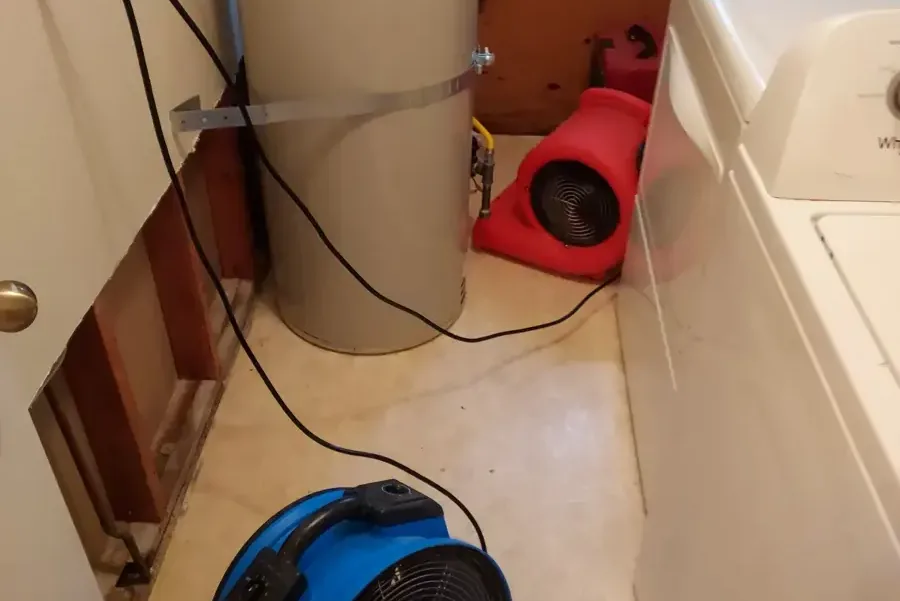
How the cleanup of sewage water works
Sewage water is treated as Category 3. The crew wears protective gear, removes the standing water and cuts out porous materials that were soaked.
The steps are described on the sewage backup cleanup page, and water extraction covers the removal of standing water.
- Extract the standing sewage water.
- Remove wet carpet, pad and the lower section of drywall.
- Clean and treat surfaces that stay.
- Dry the framing and subfloor before rebuilding.
What a family should expect
Expect the affected room to be closed off, furniture and belongings sorted, and some materials to be removed. The work is disruptive, but it is what leaves the room safe.
Permits and repairs afterward
If repairs need a permit, applications and inspection requests go through City Hall. The City uses a third party firm, Bureau Veritas, for plan checks and inspections.
Springtown enforces the 2018 International Plumbing Code and the 2018 International Residential Code, and permitted work should not begin until the City approves and issues the permit.
Most cleanup work does not need a permit, but plumbing repairs and rebuilding after a large loss may. The City can say what applies.
Keeping paperwork from the cleanup and any plumbing repair in one folder makes later questions from the City or an insurer easier to answer.
After the cleanup
The area is dried until moisture readings are normal, and a plumber confirms the drain is clear. The town page lists the full range of services, and the main site has an overview of sewage backup cleanup.
Damp materials left in place can start to grow mold after 24 to 48 hours, so the cleanup should not wait.
A final walk through with the crew confirms that odors are gone, the floor is dry and the drain runs clear.
Questions
Who provides sewer service in Springtown?
The City of Springtown provides water, wastewater and sanitation to customers in its service area.
What about homes on Walnut Creek Special Utility District water?
That district provides water only. Customers inside the city still need a City account for sewer and trash.
Who do I call if sewage backs up?
A sewer matter goes to the City. A plumber can help determine whether the blockage is in the home.
Is sewage cleanup different from water cleanup?
Yes. Sewage water is Category 3, so porous materials are removed and surfaces are disinfected.
Do repairs need a permit?
Permit applications and inspection requests go through Springtown City Hall, and permitted work should not begin until the permit is issued.
Will my homeowners policy pay for the cleanup?
That depends on the policy. Sewer backup coverage is often an added endorsement, so the policy and the adjuster decide.