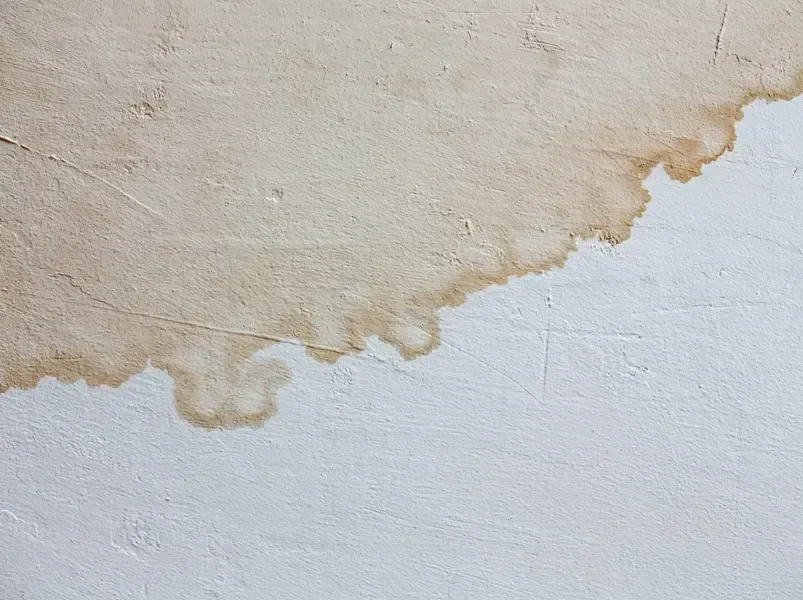
Severe storms hit Springtown at night on April 25, 2026, and the National Weather Service in Fort Worth confirmed an EF-1 tornado near the town with winds up to 105 mph. Damage was widespread west and south of town, with downed trees and power lines. Roof damage like that often hides for days, then shows up as a brown stain on a ceiling after the next rain.
Key takeaways
- Wind damage to shingles, flashing or a tree strike can leak slowly, so a stain may appear days after the storm.
- A ceiling stain means water is already above it, usually in wet attic insulation.
- Cover the roof opening with a tarp, photograph the damage and keep damaged materials for the adjuster.
- Wet insulation holds water against the drywall and has to be removed, not left to dry.
- The first rain after a tornado is the one that tests every repair.
What the April 2026 storm left behind
Parker County Emergency Services District 1 reported widespread damage west and south of Springtown. Area fire departments responded to more than 70 calls for service, and some areas faced extended power outages.
Downed trees and power lines were reported throughout the town. A tree that lands on a roof can break rafters, crack shingles and tear flashing all at once.
How roof damage becomes a ceiling stain
Water enters through the opening and soaks the attic insulation first. The insulation holds the water like a sponge, then releases it onto the drywall below.
That is why a stain often appears well away from the actual hole in the roof.
A stain that dries and fades has not gone away. The insulation above may still be wet, and the next rain will show it again.
Early signs to look for
Yellow or brown rings on a ceiling, paint that bubbles, and drywall that feels soft are clues. A sagging section means a lot of water is trapped above.
A faint smell of damp insulation in the room below can come before any visible stain.
Why the stain may grow after rain
A small patch of damaged shingle can let only a little water in at first. The stain then grows with each storm until the roof is repaired.
What to do first after wind damage
The goal is to stop more water from getting in and to record what happened. Safety comes first, since a damaged roof and a wet ceiling can both be unstable.
These steps are a good order of work.
- Photograph the roof, attic and ceiling before anything is moved.
- Place buckets under drips and move belongings out of the wet room.
- Arrange a temporary tarp over the opening as soon as the roof is safe to reach.
- Keep the breaker for a wet ceiling light or fan off until it is checked.
Safety around a damaged roof
A storm damaged roof can be slick and weak, and a wet ceiling can fall without warning. When the damage is severe, working from the ground and hiring a roofer is the safer choice.
Never climb onto a roof that is wet, torn or missing sections. A fall costs far more than any tarp.
Protecting belongings
Move furniture, electronics and papers out of any room with a stain, and cover what cannot be moved with plastic sheeting.
Fallen trees, power outages and the days after
Downed trees and power lines were reported throughout town after the storm, and some areas faced extended power outages. A home without power loses more than light: sump pumps, fans and the dehumidifiers that fight moisture all stop working.
That makes the first rain after a storm more serious. A roof that was patched in a hurry has to hold while the house is also without help from its normal systems.
- Check the attic with a flashlight once it is safe, looking for daylight, wet insulation or dark staining on the wood.
- Keep a battery or generator plan for fans and small pumps if power stays out.
- Photograph every tree, branch and damaged shingle before it is cleared.
- Ask a roofer to look at the flashing around chimneys, vents and skylights, where leaks often start.
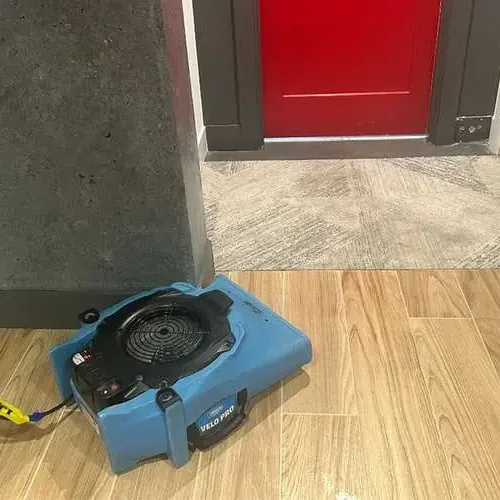
Pulling wet insulation and drying the ceiling
Wet insulation is removed from the attic so the drywall can dry from both sides. Saturated drywall that is sagging may have to be cut out to prevent a collapse.
The roof leak water damage page describes how the leak is traced, and the ceiling leak page covers how the damaged section is dried.
Once the roof is sealed and the wet material is out, the cavity is dried with fans and dehumidifiers until readings match dry areas of the house. Only then does new drywall make sense.
- Trace the leak and confirm that the roof opening is sealed.
- Remove wet insulation and any drywall that has lost its strength.
- Dry the framing with air movers and a dehumidifier.
- Check moisture readings before new drywall goes up.
Working with the adjuster
A claim for storm damage goes more smoothly with dated photos and a clear list of what was wet. Keep receipts for the tarp and for any emergency work.
The town page for Springtown water damage services lists the full range of work, and the main site has a general roof leak overview.
Ask the adjuster what documentation is preferred before throwing out wet insulation or ceiling pieces. A few samples and plenty of pictures usually cover it.
Why delay makes the loss bigger
Wet insulation and drywall can start growing mold after 24 to 48 hours, and each later rain adds more water. A small hole fixed in the first week costs far less than a ceiling that has been wet for a month.
Questions
What storm hit the area on April 25, 2026?
Severe storms struck at night, and the National Weather Service in Fort Worth confirmed an EF-1 tornado near the town with winds up to 105 mph.
Why did my ceiling stain appear days after the storm?
Water entered through a roof opening and soaked the attic insulation first. The ceiling stain shows up once the insulation is full.
Can I dry wet attic insulation in place?
Usually not. Wet insulation holds water against the drywall and is removed so the ceiling can dry.
Should I tarp the roof myself?
Only if the roof is safe to reach. A temporary tarp is an important step, and a roofer or restoration crew can place one if the roof is damaged or steep.
Do I need photos for the insurance claim?
Yes. Dated photos of the roof, attic and ceiling help the adjuster understand what happened.
How do I find where the leak is coming from?
The stain is usually not under the hole. Water travels along rafters and insulation, so a trained eye and moisture readings find the real entry point.