A gurgling tub or a toilet that fills back up is more than a plumbing annoyance. When sewage reaches the floor, the water is contaminated and the clock starts on every porous material it touches. This post explains how to tell a single clogged drain from a bigger backup, what the City of Azle lists as reasons to call, and how the cleanup is sequenced.
Key takeaways
- Check more than one fixture. If a tub, toilet and floor drain all act up together, the blockage is likely downstream of the house.
- The City of Azle Utility Maintenance page lists a sewer backed up into a house, and manholes overflowing or bubbling, as times to call the city.
- Sewage water is treated as Category 3, so people, pets and children stay out of the wet area until it is cleaned.
- Carpet, pad, baseboard and wet drywall that touched sewage are usually removed, not dried in place.
- Photograph everything before cleanup starts and keep the damaged items for the adjuster until told otherwise.
Is it one drain or the whole house?
The first question is where the water is coming up. A slow sink is a local clog, but sewage in the lowest tub or floor drain while the toilets bubble points to the pipe that leaves the house.
A quick check of the fixtures, from the highest to the lowest, tells most of the story.
- Run one sink and watch the nearest tub and floor drain for gurgling or rising water.
- Flush a toilet once and see if water shows in a lower fixture.
- Note which fixture backed up first, because that is the lowest opening in the system.
- Stop running the washer, dishwasher and showers until the cause is known.
When the city page says to call
The City of Azle Utility Maintenance page names the situations that should reach the city. Two of them matter here: a sewer that has backed up into a house, and manholes that are overflowing or bubbling.
Calling the city does not replace cleanup. It tells the city about a possible problem in the public system, while the water already on the floor still has to be handled.
If a manhole is overflowing nearby
Overflowing or bubbling manholes are on the city's own list of times to call. Keep children and pets away from that water as well, and avoid walking through it.
If only the house drain is slow
When just one fixture is slow and nothing is rising elsewhere, a plumber is usually the first step. The city and a plumber can sort out which side of the property boundary the problem sits on, and the page does not make that call for a homeowner.
Why sewage water is treated as Category 3
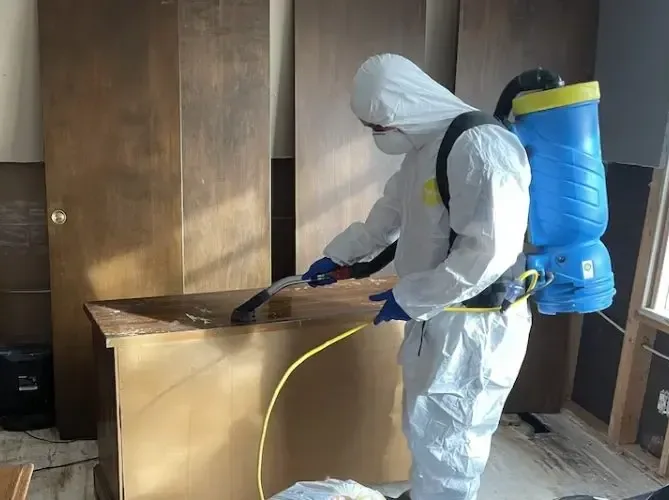
Water that has come from a sewer carries bacteria, and the industry calls it Category 3. It is handled with gloves, boots and respirators, and it is never wiped up with household towels.
Anything porous that was soaked, such as carpet, pad, insulation and the bottom of drywall, absorbs that contamination. Hard surfaces can be cleaned and disinfected, but porous materials rarely can.
What stays and what goes
Tile, sealed concrete and vinyl can usually be cleaned and disinfected. Carpet, pad, insulation and the lower part of drywall behave like sponges, so they are normally bagged and removed.
Upholstered furniture and rugs that sat in the water are judged one at a time, and many cannot be made safe again.
Why household cleaners are not enough
Bleach and towels spread contamination as often as they remove it. A crew uses extraction tools, antimicrobial products and protective gear because the goal is to leave the room safe for the people who live there.
Protecting the house while help is on the way
The gap between the first backup and the start of cleanup is when a small loss can grow. A few simple actions limit how far the water travels, and none of them involves touching the contaminated water.
Everything below is about containment, not cleanup. The cleanup itself belongs to people with the right equipment.
- Close the door to the affected room so foot traffic does not carry sewage into hallways.
- Switch off the heating and cooling system if a vent or return sits in or near the wet area.
- Lift items off the floor only if that can be done without stepping into the water.
- Wash hands with soap and water after any contact, and keep children and pets out.
- Skip the household vacuum, because it can spray contaminated water into the air.
What the crew removes first
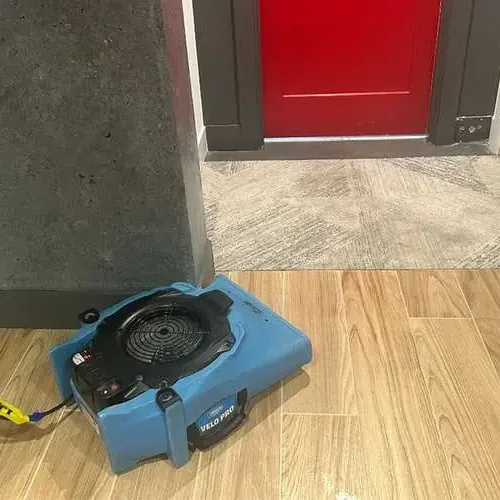
The order of work protects the rest of the house. Standing sewage is pumped or vacuumed out, and then the wet materials are cut out and bagged.
Surfaces that stay are cleaned, treated and dried so the room can be rebuilt on dry, clean framing. More on that process is on the sewage backup cleanup page.
- Extract the standing water, using the water extraction steps for contaminated water.
- Remove wet carpet, pad and the lower section of drywall and trim.
- Clean and treat the floor, studs and any hard surface that stays.
- Set air movers and dehumidifiers once the contamination is out.
What owner occupancy means for cleanup
The 2020 census counted 5,521 housing units in Azle, and 70.3% of occupied units were owner occupied. For most households that means the person living there also decides what happens inside the walls after a backup.
Renters should report the backup to the landlord in writing right away, and owners should call their insurer early, since policies differ on sewer backup coverage.
After the cleanup: drying and checks
Once the contaminated material is out, the framing and subfloor still hold moisture. Structural drying uses moisture readings to confirm the wall bases and floor are dry before anything is closed up.
Waiting past the 24 to 48 hour window lets damp materials begin to grow mold, so a backup is not something to postpone until the weekend.
Questions
Who do I call first if sewage is coming up in my house?
If the water is rising in more than one fixture or a manhole is bubbling nearby, contact the City of Azle using the Utility Maintenance page. For the cleanup of what is already on the floor, a restoration crew should be called as well.
Can I clean up a small sewage backup myself?
Small amounts on a hard floor can be handled with gloves, boots and a disinfectant, but anything that reached carpet, pad or drywall needs professional removal because those materials hold contamination.
Does homeowners insurance pay for a sewer backup?
It depends on the policy. Some include sewer backup only as an added endorsement, so the policy language and the adjuster decide.
How do I know if the backup is the city's pipe or mine?
The symptoms help but do not settle it. The city and a plumber can sort out which side of the property boundary the blockage is on.
Is it safe to stay in the house?
Stay out of the affected room, keep children and pets away, and use another bathroom if the main drain is involved.
Why not just mop it up and open the windows?
Mopping spreads contaminated water across more surface, and porous materials keep what they absorbed. Extraction, removal of soaked materials and disinfection are what make the room safe again.