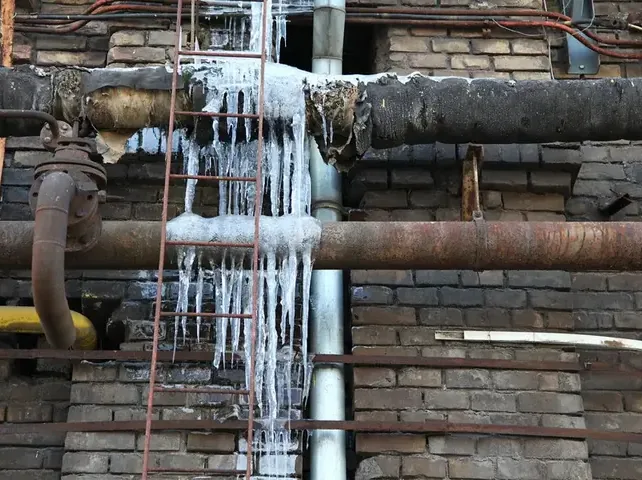
A hard freeze can split a pipe without any sign until the ice melts. Then water runs inside a wall or a ceiling, often while the household is asleep or away. The steps below put the shutoff valve first and then follow the order a restoration crew uses on the thaw, with the insurance rules from the Texas Department of Insurance in plain terms.
Key takeaways
- Close the main shutoff valve as soon as pipes freeze, before anything has a chance to split and thaw.
- The Texas Department of Insurance says sudden and accidental water coverage pays for burst pipe damage, and flood insurance does not.
- The same agency warns that frozen pipe claims may be denied if the heat was not kept on in the home.
- After the thaw, the work runs in order: valve, extraction, then drying behind walls and ceilings.
- Document every wet surface with photos before anything is moved.
Find the shutoff valve before the cold arrives
Most people look for the valve for the first time while water is already spreading. Finding it ahead of a freeze takes two minutes and makes the rest of the night easier.
Owners should also confirm that the valve actually turns, since a stuck valve is no help.
Label the valve with a bright tag so a guest or a neighbor can find it in the dark. A tag also helps a plumber who arrives while the owner is away.
- Look near the water heater, in a garage wall or at the meter box outside.
- Turn it once now to make sure it moves, then open it again.
- Tell every adult in the household where it is.
- Keep a flashlight and a pair of gloves close by.
What to do when pipes freeze
The Texas Department of Insurance advises closing the shutoff valve when pipes freeze. That stops water from flowing into a pipe that may already be cracked, so the thaw does not turn into a flood.
Open the faucets slightly after the valve is closed, and look for any pipe that is bulging, frosted or silent when the tap is opened.
Signs of a pipe that has already split
A damp spot on a ceiling, a stain on a wall or the sound of running water when nothing is on are common clues. Those signs usually appear after the ice melts.
Where freezes tend to split pipes
A freeze does not hit every pipe in a house equally. Pipes that run through unheated or exposed spaces lose heat first, and a split there can send water into a wall or a ceiling before anyone notices.
Knowing the likely spots makes the thaw check quicker, because the walk around can start where trouble is most probable.
A pipe can split a short distance from the spot that froze, since ice pushes pressure along the pipe. The visible crack is not always where the water first stopped.
- Pipes in an attic or along an exterior wall, where insulation is thin or missing.
- Supply pipes in a garage, especially near the door.
- Outdoor hose connections and the pipes just behind them.
- Pipes under a kitchen or bathroom sink on an outside wall.
- Any pipe near an air leak, such as a gap around a window or a vent.
What the Texas Department of Insurance says about coverage
The agency states that sudden and accidental water coverage pays for burst pipe damage, while flood insurance does not. That distinction matters because people sometimes assume a flood policy is what applies to a split pipe.
It also warns that frozen pipe claims may be denied if the heat was not kept on. Keeping a home heated, even when away, is part of how a claim holds up.
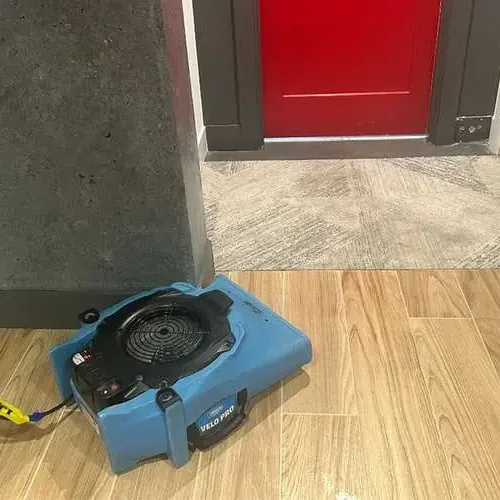
The order of work on the thaw
After the valve is closed, the crew checks for the failure point and removes the water that escaped. Extraction comes before drying, because wet materials cannot dry while standing water remains.
Details of the repair side are on the frozen pipe water damage page, and the steps for a split pipe that has already flooded a room are on the burst pipe water damage page.
- Confirm the main valve is closed and the home is safe to enter.
- Use water extraction to remove standing water from floors and carpet.
- Open wall and ceiling sections where the readings show wet insulation or drywall.
- Set air movers and dehumidifiers and track the readings until the framing is dry.
Why the walls and ceilings are opened
Water from a split pipe often runs inside the cavity, not along the surface. Opening a small section lets the crew see where it went and place drying equipment where it can do the most good.
Why the drying numbers matter
Moisture readings turn guessing into a plan. They show when the framing is dry and when it is safe to close up the wall, which protects the repair and the claim.
Documenting the loss for the adjuster
Photos taken before cleanup show what the water reached. A short written note listing the date, the time the leak was found and when the valve was closed helps the claim stay clear.
Keep receipts for emergency work and do not throw away damaged items until the adjuster has had a chance to see them or says otherwise.
Keeping the next freeze from becoming a claim
Simple habits help: keep the heat on, open cabinet doors under sinks on cold nights and let one tap drip slightly during a hard freeze. Insulation on exposed pipes in an attic or garage wall is also useful.
None of this removes the risk, but it improves both the chances of avoiding a split and the position of a claim if one happens.
Questions
Should I turn off the water if the pipes are only frozen?
Yes. The Texas Department of Insurance advises closing the shutoff valve when pipes freeze, so water does not run into a pipe that has cracked.
Does flood insurance cover a burst pipe?
According to the Texas Department of Insurance, flood insurance does not. Sudden and accidental water coverage is what pays for burst pipe damage.
Can a frozen pipe claim be denied?
The agency says it may be, if the heat was not kept on in the home, so heating the house during cold weather matters.
How soon should the wet area be dried?
Quickly. Damp drywall and insulation begin to grow mold after 24 to 48 hours, so extraction and drying should start right after the pipe is shut down.
What if I cannot find the shutoff valve?
Try the meter box outside, where a utility valve may shut water to the whole property, and then call a plumber and a restoration crew.
Can I drain the system to lower the risk?
Closing the main valve and opening the lowest tap lets the water drain from the pipes, which can reduce pressure on a cracked pipe. A plumber can explain the safest way for a given house.